Driving change from the middle: how Auckland Transport is redefining the power of tier two spend
16 December 2025
When Auckland Transport (AT) talks about using its buying power for good, it is describing a long-term strategy to change how public money strengthens communities. As one of New Zealand’s largest infrastructure procurers, AT spends between $2–3 billion each year across public transport, infrastructure, and corporate services. With that comes both opportunity and responsibility.
Auckland Council Group’s Tāmaki Ora Māori Outcomes Performance Evaluation Framework 2025-27 sets an ambitious target: By 2034, 10% of influenceable procurement spend will be directed to Māori-owned businesses, tracked through a group-wide reporting system. Auckland Transport is already well on the path to working towards this goal, and they recognise that achieving the target will require structure, consistency, and a willingness to look at the system differently.
“We realised early on that most of our big contracts were out of reach for smaller Māori and Pasifika businesses,” says Rachael Randal, AT’s Manager Sustainable Procurement & Supply Chain Partnerships. “Even if we wanted to work with them directly, the scale of our projects made it difficult. So we asked ourselves where the real opportunities sit. The answer, in the near-to-medium term, was in our tier two spend.”
Shifting focus to unlock opportunities in the supply chain
For AT, “tier two” refers to the subcontracting layer: the spend that happens beneath the main head contractors on large projects. In infrastructure, where contracts can span a decade and hundreds of millions of dollars, these subcontracting relationships create an enormous opportunity for smaller, emerging businesses to gain experience and visibility.
Since 2016, AT has been exploring how to make that happen. What began as small, informal trials within a few infrastructure projects evolved into a structured programme to embed supplier diversity into everyday procurement.
In 2021, AT published its first Sustainable Procurement Action Plan, supported by clear performance measures and council-wide alignment. It set out how supplier diversity would be woven into procurement processes, systems, and contracts as a measurable commitment.
“Initially, our approach was aspirational but not yet structured,” Rachael recalls. “We’d say, ‘We want supplier diversity,’ but we weren’t specific about what that meant in numbers or expectations. Now, we’re setting very clear targets and tracking progress monthly. That has changed everything.”
Turning policy into practice
AT’s tier two approach is now built into its procurement framework. Major contracts in infrastructure, public transport operations, and other services include supplier diversity clauses that require head contractors to engage Māori and Pasifika businesses.
To support accountability, AT has linked these commitments to performance incentives and abatements.
“For example, in our Road Corridor Maintenance contracts, which are long-term and large-scale, supplier diversity is written into the performance evaluation framework,” says Rachael. “If contractors meet or exceed their targets, there is a financial reward. If they fall short, there is an abatement. It sends a very clear signal about what we value.”
That approach is producing results. Every contractor in the Road Corridor Maintenance programme exceeded their initial agreed diversity targets, setting a strong baseline for future growth.
In another project, Dempsey Wood achieved 27 percent of its total contract spend with Māori and Pasifika suppliers.
“That is 27 percent of the whole contract value, not just the subcontracted portion,” says Rachael. “They worked with 20 different diverse suppliers, nine of which were Māori or Pasifika. It shows what is possible when intent and accountability go hand in hand.”
Building capability through partnership
AT works closely with Amotai to connect with verified Māori and Pasifika businesses.
“Amotai is our main source of diverse suppliers,” Rachael says. “Their verification process gives us confidence, and their meet-the-buyer events and summits are invaluable. They bring us, our contractors, and the suppliers into the same room. It reinforces that we are on this journey together.”
To deepen the impact, in 2025 AT launched the Kake Mai Supplier Diversity Programme (Kake Mai ki te Rironga Pāpori o AT Programme)appointing six Māori and Pasifika civil construction businesses for direct and sub-contractor opportunities.

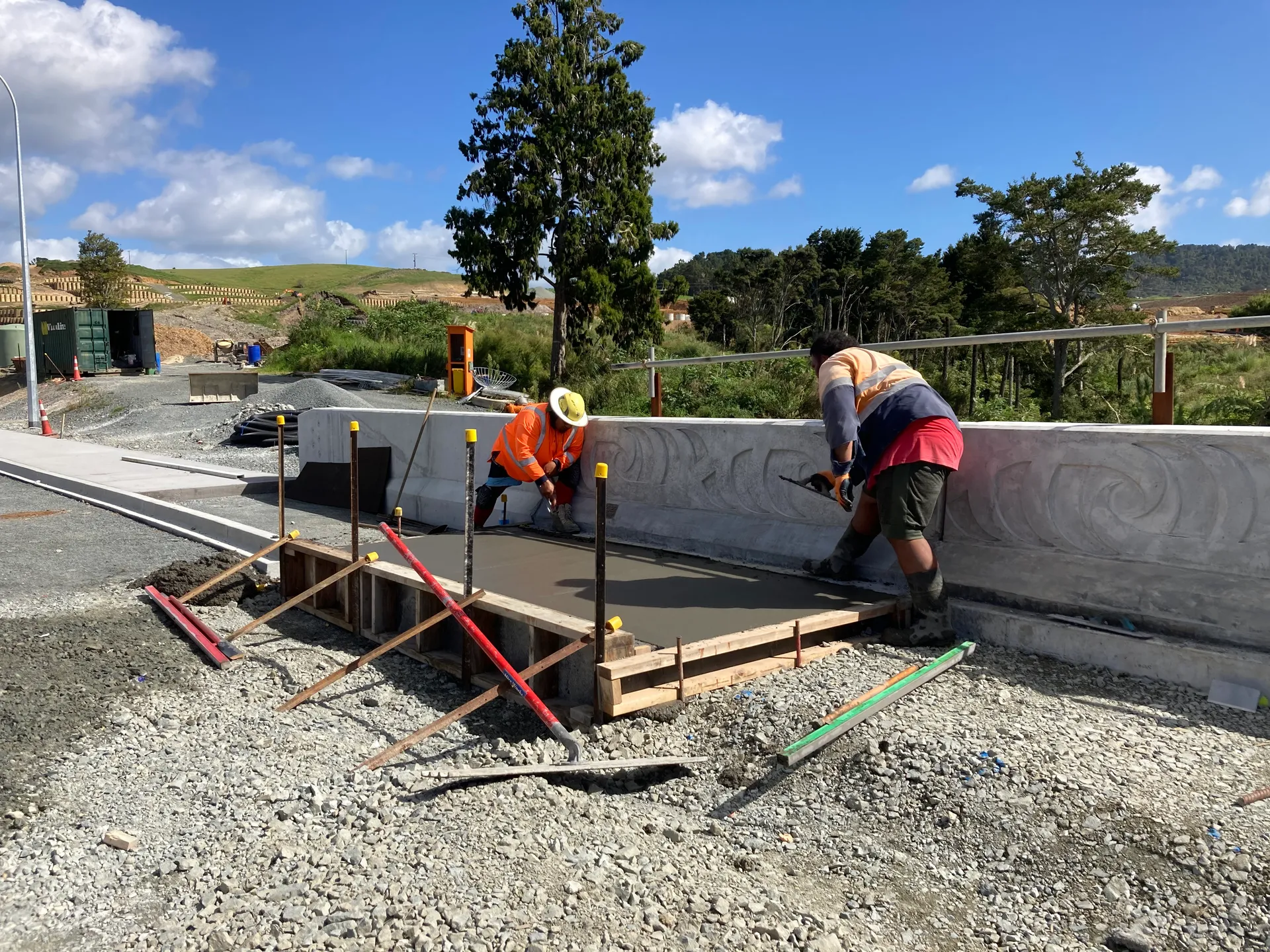
Lite Civil (Kake Mai supplier) and AT project team on site at Te Kia Ora Marae
“We wanted to start with a small number of businesses and really wrap support around them,” Rachael explains. “We match them with head contractors who can mentor them, and we intentionally connect them with opportunities to build their track record on AT projects. Our vision is that in five years’ time, these suppliers will have the experience and capacity to compete on an even playing field for large-scale head-contractor work.”
This partnership model creates long-term relationships and genuine pathways for growth.
“We are focused on meaningful partnerships,” she says. “Our aim is to support emerging suppliers to grow sustainably, not just to fill a short-term need.”
Data that drives action
Tracking progress across billions of dollars of procurement might sound complex, but AT’s approach is refreshingly straightforward. Contractors report their monthly tier two spend using a simple spreadsheet, listing subcontractors, New Zealand Business Numbers (NZBN), diversity type, and verification source.
“We’ve kept the process simple and focused,” Rachael says. “We tried more complex systems, but the feedback was clear. The most important thing is to get the data consistently so we can act on it.”
That data now feeds into AT’s organisation-wide sustainability reporting, allowing teams and council partners to see how their actions contribute to shared goals.
The bigger picture
Tier two spend recognises current market realities and ensures that Māori and Pasifika businesses have access to meaningful opportunities within major public contracts.
“This is our solution for now,” Rachael says. “Long-term, our aim is to grow more Māori and Pasifika tier one suppliers, and that takes time. Tier two gives us a way to influence the system from within.”
By embedding supplier diversity across every major procurement, AT is ensuring that transport and infrastructure investment contributes to social and economic wellbeing for Auckland’s communities.
“Every dollar we spend has a ripple effect,” Rachael reflects. “If we can direct that spend in a way that strengthens Māori and Pasifika businesses, we are helping to build a fairer, more resilient Auckland.”
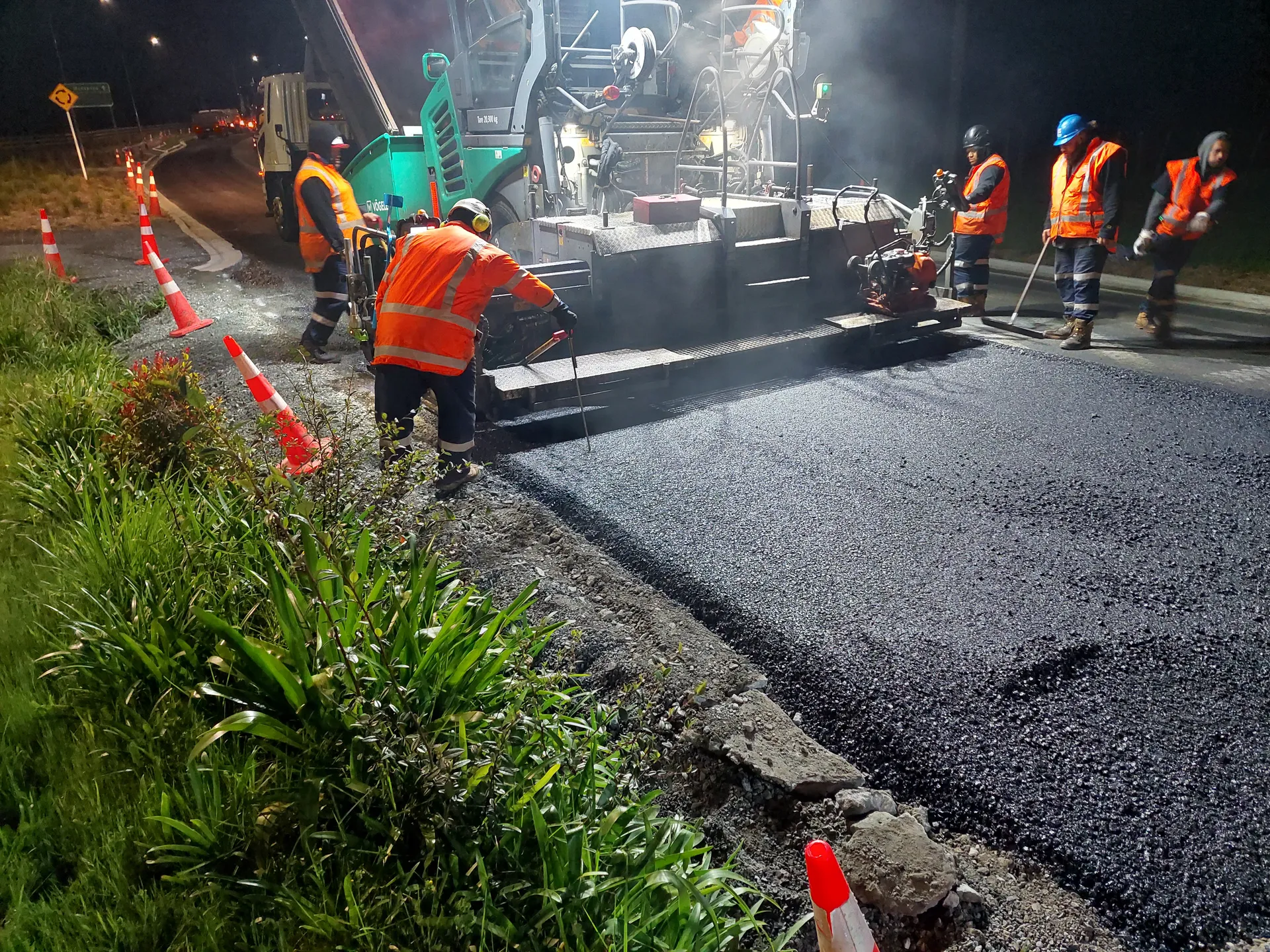
AT night works on Matakana Link Road project