Junior Ioane and the kind of advocacy that opens doors
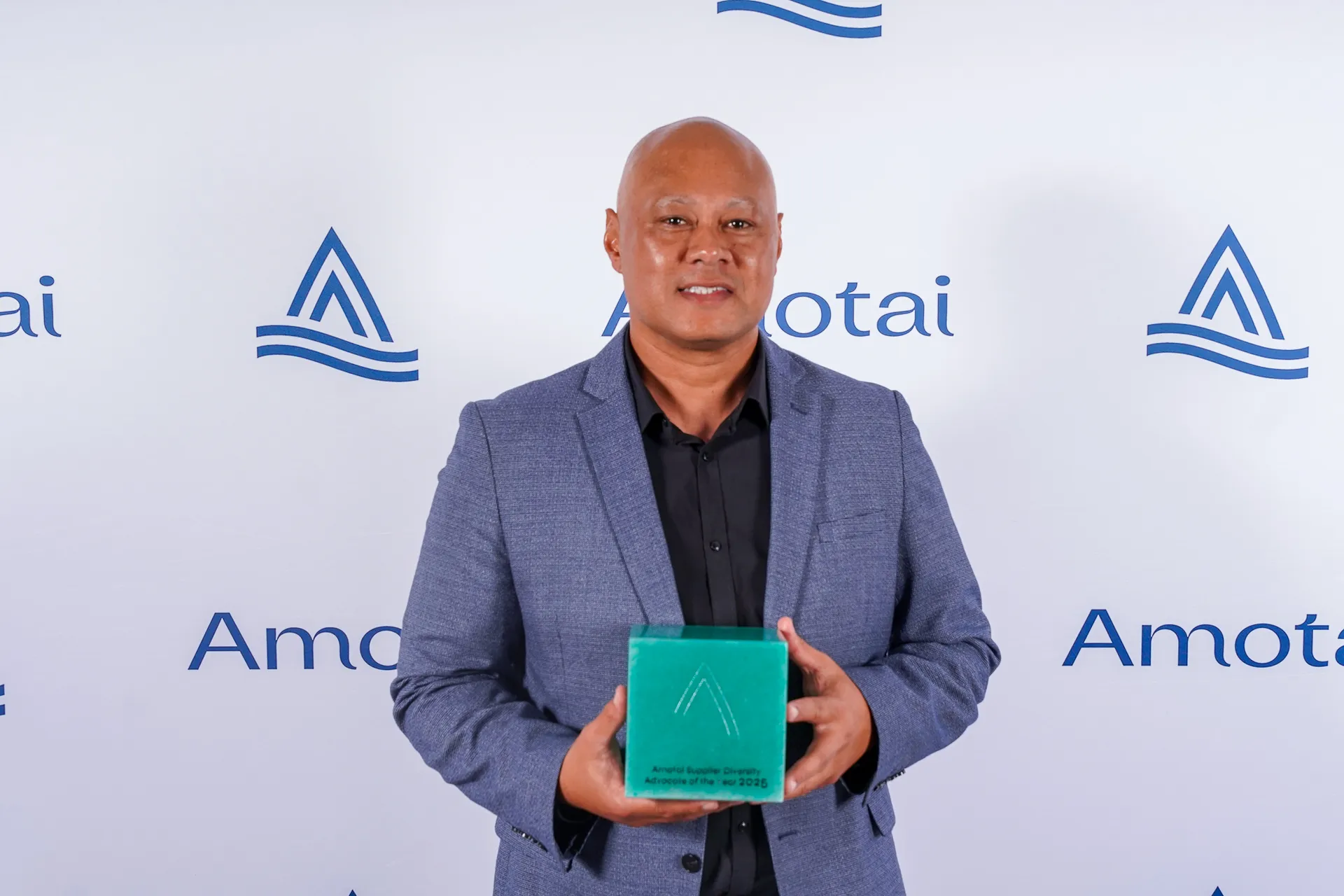
Junior Ioane, Amotai Supplier Diversity Advocate of the Year 2025
21 January 2026
When Junior Ioane was announced as Amotai’s Supplier Diversity Advocate of the Year, the reaction in the room was immediate. There were cheers, quiet tears, and a standing ovation for a man many describe as humble, softly spoken and deeply committed to lifting others.
Junior works at the Ministry of Education, where he has become one of the most influential champions of supplier diversity in the public sector. Yet recognition has never been his goal. “This mahi has never been about me,” Junior says. “It’s about creating space for others and making sure the system works the way it should.”
Grounded in service and community
Junior’s approach to procurement is shaped by his upbringing, his Samoan heritage and a strong sense of service. He often speaks about standing on the shoulders of those who came before him, and about the responsibility that comes with being in a position to influence outcomes.
“I’ve always been taught that if you’re in a position to help, you help,” he says. “That’s just how I was raised.”
For Junior, supplier diversity is about recognising the capability that already exists within Māori and Pasifika communities.
“When I sit with suppliers and hear their stories, that’s when it really hits,” he says. “You realise how much talent is out there, and how often it’s been overlooked.”
Seeing supplier diversity as a strategic lever
Junior was an early advocate for Amotai within the Ministry of Education. He recognised that Amotai offered something practical and credible: a way to connect intent with real Māori and Pasifika businesses, without compromising quality or outcomes.
“There was a point where I realised this wasn’t just about good intentions,” he says. “This was actually a strategic lever. If we used it properly, it could genuinely change things.”
Under Junior’s leadership, supplier diversity was embedded into MOE’s Broader Outcomes Strategy and woven through everyday tools like procurement templates, question banks, guidance materials and training. This made inclusive procurement easier for teams to apply and less dependent on individual champions.
“What mattered to me was making it business as usual,” he says. “So that it didn’t rely on one person feeling like they had to ‘push’ it all the time.”
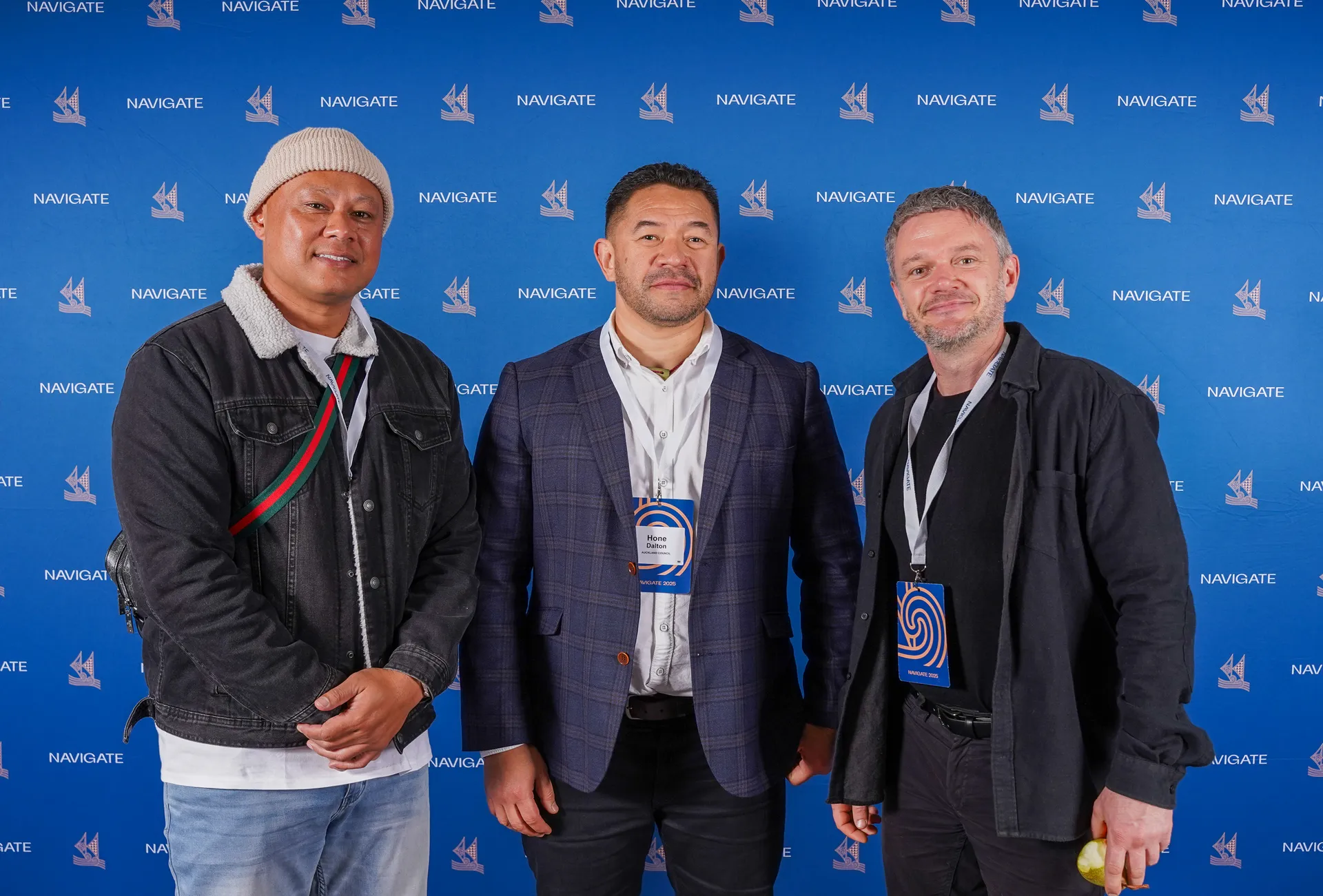
Junior Ioane (Amotai Supplier Diversity Advocate of the Year) is joined by Hone Dalton, and Mark Gatt.
Turning policy into practice
One of Junior’s most significant contributions has been the development of procurement approaches for infrastructure projects under $500,000. These were designed to reduce barriers for Māori and Pasifika businesses and create more accessible pathways into Ministry work.
“If we wanted different outcomes, we had to change how we did things,” he says. “That meant looking honestly at where the barriers were and doing something about them.”
Alongside this, Junior supported webinars and supplier briefings to demystify government procurement. These sessions helped suppliers better understand processes and expectations, while also building confidence on the buyer side.
“It’s not about lowering the bar,” Junior says. “It’s about making sure people actually have a fair chance to reach it.”
Real outcomes and real growth
The impact of Junior’s mahi is measurable. In 2024, the Ministry of Education exceeded the Government’s Progressive Procurement target, with 9.7 percent of eligible contracts awarded to Māori and Pasifika businesses.
For Junior, the numbers only tell part of the story.
“The stats are important, but what really matters are the stories behind them,” he says.
One Amotai supplier reflects on being encouraged into the MOE space. “It wasn’t just about winning work. That first opportunity gave me confidence, helped my business grow, and meant I could bring other suppliers with me too.”
Junior hears stories like this often. Suppliers talk about winning their first contract, hiring staff, collaborating with other Māori and Pasifika businesses and accessing central government work for the first time.
“When you hear that someone’s been able to grow their business or employ more people because of an opportunity, that’s huge,” says Junior. “That’s when you know it’s worth it.”
Influencing from within
Junior’s influence has extended beyond individual projects. He has worked closely with regional teams, supporting them to build confidence in engaging with Māori and Pasifika suppliers and helping them see supplier diversity as part of delivering value, not an added risk.
“I’ve seen a real shift over time,” he says. “People are more confident now. They’re asking better questions and thinking more creatively.”
He is also a regular contributor at Amotai buyer events and sector forums, where he shares lessons and encourages other agencies to lift their ambition.
“I don’t see this as something MOE should do alone,” he says. “This is bigger than any one organisation.”
Building the right environment
Junior often speaks about the importance of having the right relationships and platforms in place to support meaningful outcomes. For him, Amotai has been part of creating an environment where supplier diversity can move from intent into everyday practice.
“Amotai helps bridge the gap between intention and action,” he says. “It gives our teams confidence and gives suppliers visibility.”
He does not describe himself as a leader. Instead, he talks about leadership as something quieter and more consistent, shown through humility and a willingness to help others succeed.
“Leadership isn’t about being loud,” he says. “It’s about being reliable.”
At the awards ceremony, his speech reflected those values. He spoke about gratitude and the responsibility to keep opening doors.
“I just hope people remember that this work is about people,” he says. “If we keep that at the centre, the rest will follow.”